Used electric cars are the most interesting and most oversold category in this trade. The running-cost case is genuinely strong. The infrastructure case is genuinely weak. Anyone presenting only one of those is selling you something.
Here is where the line currently sits.
Why the supply exists at all
China’s transition to electric and plug-in hybrid vehicles has accelerated turnover in its domestic market. Cars are being traded in earlier, which pushes more of them into export channels — and the ones arriving are often newer and better equipped than the combustion stock at the same price.
There is also a configuration advantage that gets overlooked: Chinese vehicles are built left-hand drive, which is correct for Ghana, Nigeria, Côte d’Ivoire and Senegal, and wrong for the right-hand-drive half of the continent. For LHD markets the Chinese EV supply is directly usable rather than requiring conversion.
What genuinely works
Running cost. No fuel bill. For a driver covering high daily distances on predictable routes, that changes the weekly arithmetic more than any purchase-price difference.
Duty treatment. Ghana has been reducing import duty on electric vehicles as a matter of policy. Administration varies, so confirm it applies to your specific import before pricing on it — but the direction is favourable.
Engine-capacity taxes do not touch it. Nigeria’s 2026 Green Tax Surcharge is keyed to engine capacity of 2000cc and above. An electric vehicle has no engine displacement to assess.
Specific use cases fit well. Fleets returning to one depot, short-distance commercial routes, and drivers who can charge at home or at a fixed workplace. Where charging is planned rather than hoped for, the case is strong.
What genuinely does not
Charging infrastructure is thin outside major urban centres. This is the binding constraint, and it is not one your buyer can solve by being careful.
Battery condition is hard to assess. An engine tells you about itself — noise, smoke, oil, behaviour under load. A battery does not. State of health requires diagnostic access and a technician who knows what the numbers mean. An ordinary pre-purchase eyeball is close to worthless on an EV.
Labour and diagnostics are scarce. High-voltage work needs training, equipment and safety procedure. In much of the region that means one workshop in the capital rather than a choice of three nearby.
Parts and software support. Replacement modules, and the software access to configure them, are a real dependency and not always available locally.
The battery questions to ask before buying
If you take nothing else from this article, take these.
- What is the measured state of health, from a diagnostic readout rather than a dashboard estimate?
- What is the remaining manufacturer battery warranty, and is it transferable across borders? Frequently it is not.
- How many charge cycles, and was the car predominantly fast-charged? Heavy DC fast-charging ages a pack faster.
- Any accident history affecting the pack or its cooling? A structurally damaged battery enclosure is a safety matter, not a cosmetic one.
- Which charging standard does it use, and does it match what your buyer can actually reach?
Get those answers in a written inspection report. “The battery seems fine” is not an answer.
Where the Atto 3 sits
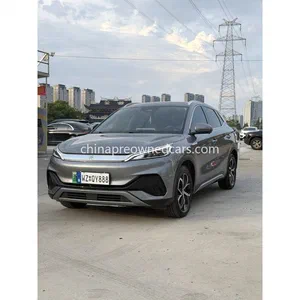
Of the models we carry, the BYD Atto 3 is the electric option: 150 kW motor, 175 mm ground clearance, five seats. On our internal ranking for West African road conditions it scores lowest of the five — and the score is slightly unfair, because it is marked down for charging dependency rather than for the car.
With charging solved, the 150 kW motor and zero fuel cost make it compelling. Without charging solved, it is the wrong purchase at any price. It is a specialist choice for buyers with dependable power, not a general recommendation.
Our honest position
We will sell you an EV and we will tell you first whether we think your use case supports one. The reason is not virtue, it is that a car your buyer cannot charge comes back as a dispute rather than a repeat order.
For most West African buyers today, a hybrid or an efficient 1.5T petrol remains the more practical purchase. The EV window is opening market by market, city by city, and it is opening — just not everywhere at once.
Common questions
Q: Should I import a used electric car to Ghana or Nigeria? A: Only where your buyer has dependable charging. With charging solved the economics are strong and Ghana’s EV duty relief helps. Without it, buy petrol.
Q: How do I check a used EV battery? A: Insist on a diagnostic state-of-health readout, cycle count, fast-charging history and any accident record affecting the pack — in writing, in the inspection report.
Q: Does the manufacturer battery warranty transfer to Africa? A: Frequently not. Verify per vehicle and per brand rather than assuming, and price the car as though it does not.
Q: Do EVs avoid Nigeria’s new green tax? A: The surcharge announced in the 2026 Fiscal Policy Measures applies to engine capacities of 2000cc and above. An EV has no displacement, but confirm treatment with your clearing agent.