
The new-versus-used argument is usually framed as prudence against indulgence. That framing hides the actual mechanism, which is depreciation — and depreciation is not linear.
Once you know where the curve flattens, the decision becomes arithmetic rather than temperament.
Where the value actually goes
A new car loses the largest share of its value in its first two to three years. Whoever owns it during that window pays for it. Whoever buys afterwards gets a vehicle whose steepest loss has already been absorbed by someone else.
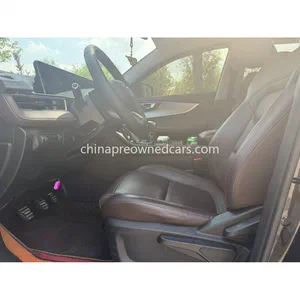
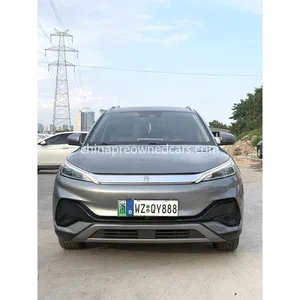
That is the whole case for the two-to-five-year-old import, and it is the reason Chinese used stock is priced the way it is. China’s domestic market turns over quickly, so the export supply is concentrated exactly in the years just after the steep drop.
The buyer’s return on that is straightforward: substantially more car per dollar, with most of the depreciation risk already spent.
Where new still wins
Being honest about this makes the used case stronger, not weaker.

Warranty and service continuity. A new car comes with a manufacturer relationship. A used import comes with an inspection report. Both are forms of assurance; only one includes someone else paying for failures.
Financing. New-vehicle finance is often available on better terms than used-import finance, and for a buyer whose constraint is monthly cash rather than total cost, cheaper credit can outweigh a higher price.
Zero unknowns. No previous owner, no history to verify, no odometer question. For buyers who value that certainty above money, it is a legitimate preference.
Fleet standardisation. An operator buying eight identical units with one service contract has procurement reasons that a used-market price advantage does not overcome.
What tips it back toward used in this market
The comparison is not new-versus-used, it is new-versus-recent. A 2022 SUV with 40,000 verified kilometres is not the same product as a 2012 one with 180,000. Lumping them together as “used” is what makes the new-car case look stronger than it is.

Import duty is proportional. Duty is assessed on CIF, so a lower vehicle value means a lower tax bill on top of the lower purchase price. In Nigeria, where combined charges commonly run near 50–70% of CIF, the saving compounds hard.
Engine size now carries a tax consequence. Nigeria’s 2026 Fiscal Policy Measures add a Green Tax Surcharge on vehicles of 2000cc and above. The recent Chinese 1.5T and 1.6T SUVs sit below that threshold.
Age rules reward recency, not novelty. Ghana’s incoming standard from 1 October 2026 bans imports over fifteen years old. A three-year-old car satisfies it with twelve years of headroom. Nothing about the rules requires a car to be new.
The comparison a real buyer makes
Almost nobody in Accra or Lagos is choosing between a new SUV and a used one. They are choosing between a recent Chinese SUV and a decade-old European SUV at a similar landed price.
| 2022 Chinese SUV | 2014 European SUV | |
|---|---|---|
| Mileage | around 49,000 km | around 150,000 km |
| Inspection report | Third-party, included | Usually none |
| Engine | 1.5T–1.6T petrol | 3.0L diesel |
| Parts cost | Moderate | High |
| Nigerian green tax | Below threshold | Above threshold |
Eight years newer, a third of the mileage, documented condition, and cheaper to run and to tax. The European car wins on badge, and for some buyers the badge is the product. That is a preference worth respecting rather than arguing with — but it should be a conscious choice, not the result of assuming “used” means “old”.

Common questions
Q: Is buying pre-owned always cheaper overall? A: Not always. Where cheap new-car financing exists and the used alternative is genuinely old, new can win on total cost. The case for used is strongest in the two-to-five-year band.
Q: How much of a car’s value is lost in the first years? A: The largest share goes early, which is why the two-to-five-year band offers the best value per dollar. Exact figures vary by model and market.
Q: Does a used import cost more in duty than a new one? A: Less, generally, because duty is proportional to value. Ghana also levies an examination fee that applies only to used vehicles, and an overage penalty on older units.
Q: What replaces a warranty on a used import? A: A genuine third-party inspection report, documented condition disclosure, and a seller who tells you what the inspection found. It is not equivalent to a warranty, and should not be sold as one.