Second-hand electric and hybrid SUVs require a different export assessment from combustion vehicles. This article examines battery state of health, charging compatibility, shipping controls, and the market factors that affect resale value in West Africa.
Battery condition changes the auction calculation
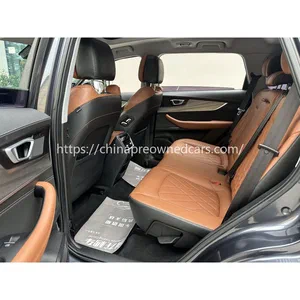
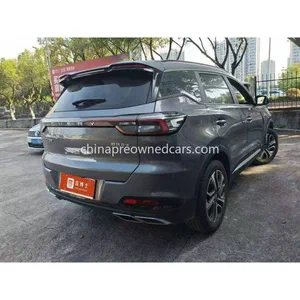
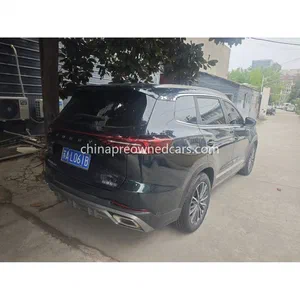
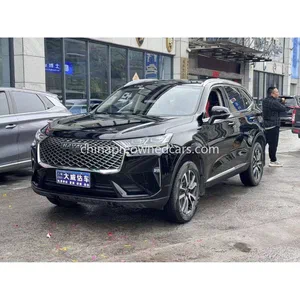
Demand for Chinese new energy vehicles is developing unevenly across Ghana, Nigeria, Kenya, Uganda, and Tanzania. The BYD Atto 3 attracts interest as a compact electric SUV, while the Chery Tiggo 7 Plus and Chery Tiggo 8 Pro appeal to buyers seeking more cabin space and familiar petrol or hybrid formats where available. Geely Coolray and Haval H6 remain relevant to customers who prioritise conventional refuelling and established repair practices. Chinese models often sit below comparable European products in acquisition cost and below some Japanese alternatives in brand familiarity, so equipment, battery evidence, and parts access influence the final buying decision.
A 2nd hand car auction listing may show mileage and vehicle grade, but neither proves battery condition. The key document is a battery state-of-health report linked to the vehicle identification number. It should identify usable capacity, test conditions, cell imbalance, fault codes, charge history where available, and whether the result comes from the battery-management system or an independent diagnostic tool. A road test should include charging, acceleration, regenerative braking, and energy consumption. A battery that reaches a high displayed charge level can still have reduced usable capacity.

Mileage is only one part of degradation. High temperatures, repeated rapid charging, long periods at a full state of charge, and extended storage can affect battery performance. Auction inspection should check the battery casing for impact, water entry, corrosion, and previous repair marks. The high-voltage warning system, cooling circuit, charging port, isolation readings, and onboard charger also need attention. For a hybrid vehicle, the petrol engine, transmission, hybrid control system, and smaller auxiliary battery require separate checks; a healthy traction battery does not offset an engine fault.
Battery condition directly affects resale positioning. A vehicle with a documented capacity result can be priced with less uncertainty, while an unexplained range loss may force a discount that exceeds the original auction saving. Range must be assessed against local driving patterns, climate, traffic, road quality, and access to charging. Buyers in cities with limited public chargers may prefer a hybrid SUV, even if an electric model has a lower running cost. Battery replacement availability and the cost of specialist diagnosis also shape long-term value.
Charging and shipping checks before purchase
Connector compatibility is a frequent export risk. Chinese-market vehicles commonly use GB/T connectors, while many international charging networks use CCS, and CHAdeMO remains present in some older installations. Ghana, Nigeria, Kenya, Uganda, and Tanzania do not operate a single uniform charging system. Public and private networks can differ by site, and an adapter may not support the required charging speed, communication protocol, or safety functions. The importer should confirm the vehicle’s AC and DC connector type, voltage range, onboard charger specification, and compatibility with chargers already available at the intended operating location.
Battery transport also affects the shipping plan. A vehicle containing a lithium-ion traction battery is treated differently from a loose replacement battery, but the shipment still requires accurate dangerous-goods information. UN 3480 classification, battery condition, packaging controls, carrier acceptance, and port procedures may apply depending on the shipment configuration and the battery’s status. Damaged or defective batteries can face additional restrictions. The exporter should confirm whether the vehicle will move by RoRo or in a container, and whether the selected carrier accepts the vehicle under the required dangerous-goods declarations.
Export documentation must match the technical condition. China’s used vehicle exports require export licensing, customs declaration, and pre-shipment inspection before departure. The file should include the commercial invoice, packing or shipping details, vehicle identification information, ownership and export documents, inspection records, and any battery-related declarations requested by the carrier or destination authority. Customs clearance at the destination remains the importer’s responsibility under local rules. Transit and port timing can vary, so a typical shipping lead time should be treated as an estimate rather than a fixed delivery promise.
Drive side and local regulation can remove a vehicle from consideration before price is discussed. Most Chinese domestic vehicles are left-hand drive. That suits right-hand-traffic markets such as Ghana and Nigeria more readily, while buyers in Kenya, Uganda, and Tanzania must confirm whether an LHD vehicle can be registered and used under current rules. Each country sets its own conditions for vehicle age, emissions, roadworthiness, import taxes, inspection, and registration. Before payment, the buyer should obtain current guidance from customs, the registration authority, and a qualified clearing agent. Payment terms should tie the balance to agreed documents and inspection evidence, with after-sales support covering diagnostics, software, connectors, and replacement parts.
FAQ
Q: How can battery state of health be verified before export?
A: Request a VIN-matched diagnostic report, then compare its usable-capacity result with a physical charging and road test. The inspection should also record fault codes, cell balance, high-voltage safety status, and visible battery damage.
Q: Can a Chinese EV be shipped to every West African market?
A: No. Connector standards, drive-side rules, import regulations, age limits, emissions requirements, and charging access differ by country. Confirm the current rules for the destination before selecting a vehicle.