If you import the same car into Ghana and into Nigeria, the freight bill differs by $400. The duty bill differs by more than $3,000. That single fact shapes almost every decision in this business, so it is worth understanding properly rather than approximately.
The headline numbers
Ghana’s combined import charges on a used SUV commonly work out around 30-35% of CIF value. Nigeria’s commonly work out around 50-70% of CIF.
Neither figure is a published rate you can look up and rely on, because neither country charges a single tax. Both stack several.
Ghana applies import duty, VAT, the NHIL and GETFund levies, and processing fees. Nigeria applies import duty, a levy, VAT, the ETLS charge and port charges. In both cases the assessment is made against the revenue authority’s own valuation of the vehicle, not simply against the invoice you present.
What that looks like in dollars
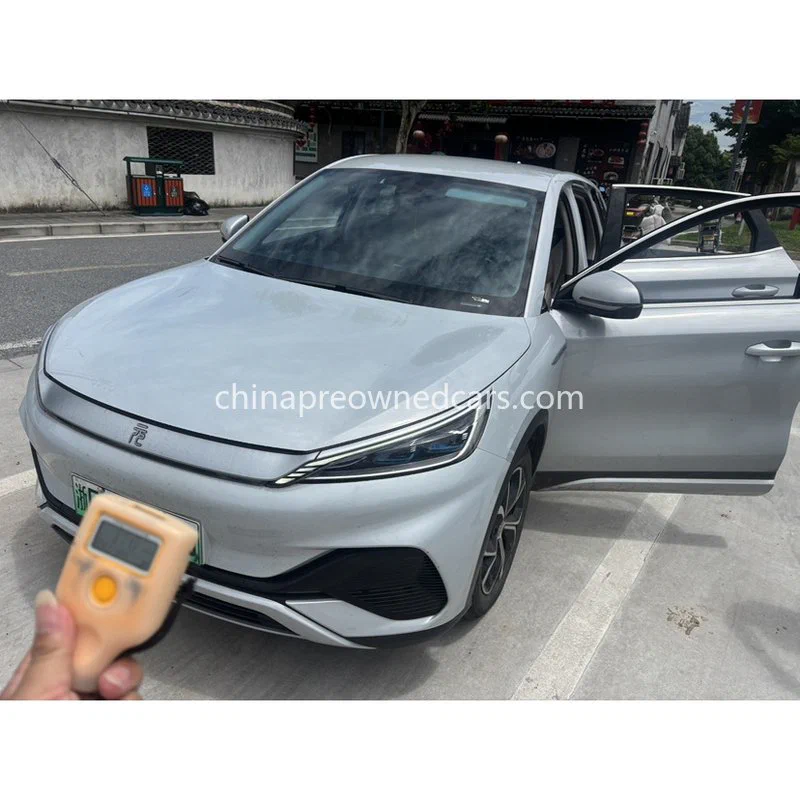
Take a 2024 BYD Atto 3 510 km Honor Lingxian at $11,111.11 FOB Nansha:
| Ghana (Tema) | Nigeria (Lagos) | |
|---|---|---|
| FOB Nansha | $11,111.11 | $11,111.11 |
| Freight | $2,000 | $2,400 |
| Estimated duty and taxes | $4,196 | $7,836 |
| Total landed | $17,307 | $21,347 |
Same car, same month, $4,040 apart. Freight explains $400 of it.
Now look at what happens with a cheaper car — a 2023 Geely Coolray at $8,888.89 FOB Nansha lands near $14,373 in Ghana and $17,837 in Nigeria. The gap narrows to $3,464, because duty is proportional. A cheaper car does not just cost less, it saves you duty on the savings. In Nigeria that compounding is worth paying attention to: every $1,000 you cut from FOB cuts roughly $500-700 from duty as well.
Why “duty on CIF” is the phrase that matters
Duty is not calculated on what you paid for the car. It is calculated on CIF — Cost, Insurance and Freight — which means your freight bill is itself taxed. Ship a car at $2,400 freight into Nigeria and you may pay $1,200-1,700 in duty on the freight alone.
This is one of the arguments for filling a container rather than shipping single units. Lower per-unit freight reduces both your freight bill and the duty assessed on it.

It is also why customs valuation matters more than your invoice. If the revenue authority values your 2023 SUV higher than you paid, you are taxed on their number. Buying honestly documented cars with verifiable history helps here, because a clean, well-documented file is easier to defend at valuation than a suspiciously cheap invoice.
Vehicle age: the counterintuitive part
Both countries penalise older vehicles, Ghana explicitly and Nigeria through age restrictions enforced at valuation.
The practical effect surprises people: a newer car frequently clears cheaper than an older one, even though it costs more to buy. A 2023 SUV at $9,500 FOB can land below a 2013 SUV at $7,000 FOB once age penalties are applied to the older car.
This is the structural reason the Chinese used market works for West Africa at all. Chinese domestic stock is 2-4 years old because China’s own used market turns over quickly. That age profile happens to be exactly what both duty regimes reward.
What we do not know, and neither does anyone selling you certainty
Rates change. Valuation practice changes. Exchange rates move, and since duty is assessed in local currency on a dollar-denominated value, a currency move changes your bill without any policy changing at all.
Anyone who gives you an exact duty figure for a shipment that has not been filed yet is guessing. We publish estimates so you can start the arithmetic and know roughly where you stand. The number that counts is the one your clearing agent gives you, and you should get that number before you quote a price to your customer, not after.
Ask your agent three specific questions: what valuation will they expect Customs to apply to this year and model, what is the current combined rate including all levies, and are there any concessions — EV relief in particular — that apply to your import specifically.
Which market should you choose?
If you are optimising margin per unit, Ghana is easier. Lower duty, English-speaking, LHD, and Tema runs predictably.
If you are optimising volume, Nigeria has several times the market depth, particularly for 7-seat SUVs, and Lagos has the highest sailing frequency from Chinese ports. The duty is worse but the buyer base is much larger.
Most of our repeat customers do not choose. They run Ghana for margin and Nigeria for volume, and they model both before every order.
Common questions
Q: Is import duty calculated on the price I paid for the car? A: No. It is calculated on CIF — the car plus insurance plus freight — and against the revenue authority’s own valuation rather than your invoice alone. Your freight cost is part of the taxed amount.
Q: Can I reduce duty by declaring a lower value? A: Both authorities apply their own valuation, so understating value tends to produce a re-assessment and a delay rather than a saving. Clean documentation on a legitimately priced car is the more reliable route.
Q: Do electric vehicles get duty relief? A: Both Ghana and Nigeria have signalled EV concessions. Ghana’s is the more established. In both cases administration varies, so confirm with your agent whether it applies to your specific import before pricing on it.
Q: How much cheaper is Ghana really? A: Roughly $3,460-4,040 per unit on the models we export, depending on vehicle value. See the full per-model tables for Ghana and Nigeria.