Most people importing into Ghana for the first time assume duty is a percentage of what they paid for the car. It is not, and the gap between those two ideas is where first-time margin disappears.
Here is how the Ghana Revenue Authority describes its own method, and what it means when you are pricing a deal.
The valuation starts with the factory price, not your invoice
GRA’s published method for vehicle duty begins with the first purchase price — the manufacturer’s price at the time the car was built. That figure then attracts depreciation of 0–50% based on the age of the vehicle, which produces a Free On Board value. The current exchange rate is applied, and freight and insurance are added on top.
Read that again, because it inverts the usual assumption. You are not taxed on a bargain you negotiated. You are taxed on a depreciated version of what the car cost new. A well-bought car and a badly-bought car of the same model year can face a similar assessment.
The practical consequence: your negotiating skill affects your cost, not your duty. Both matter, but only one of them is under your control at the port.
Engine size sets the duty band
Import duty on passenger cars under HS 8703 is banded by cylinder capacity, and the bands are steep:
| Fuel | Capacity | Import duty |
|---|---|---|
| Petrol | not exceeding 1000 cc | 5% |
| Petrol | 1000–3000 cc | 10% |
| Petrol | exceeding 3000 cc | 20% |
| Diesel | not exceeding 1500 cc | 5% |
| Diesel | 1500–2500 cc | 10% |
| Diesel | exceeding 2500 cc | 20% |
Vehicles designed to carry ten or more persons sit at 5%. Motorcycles are at 20%.
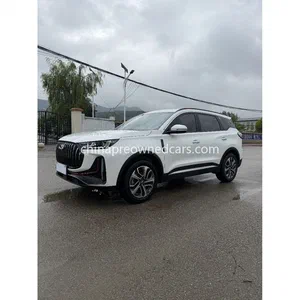
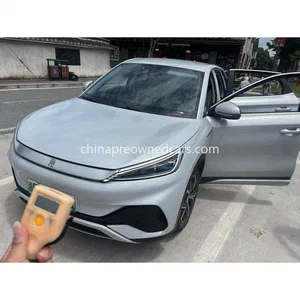
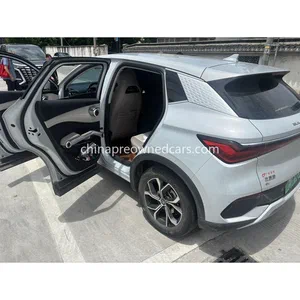
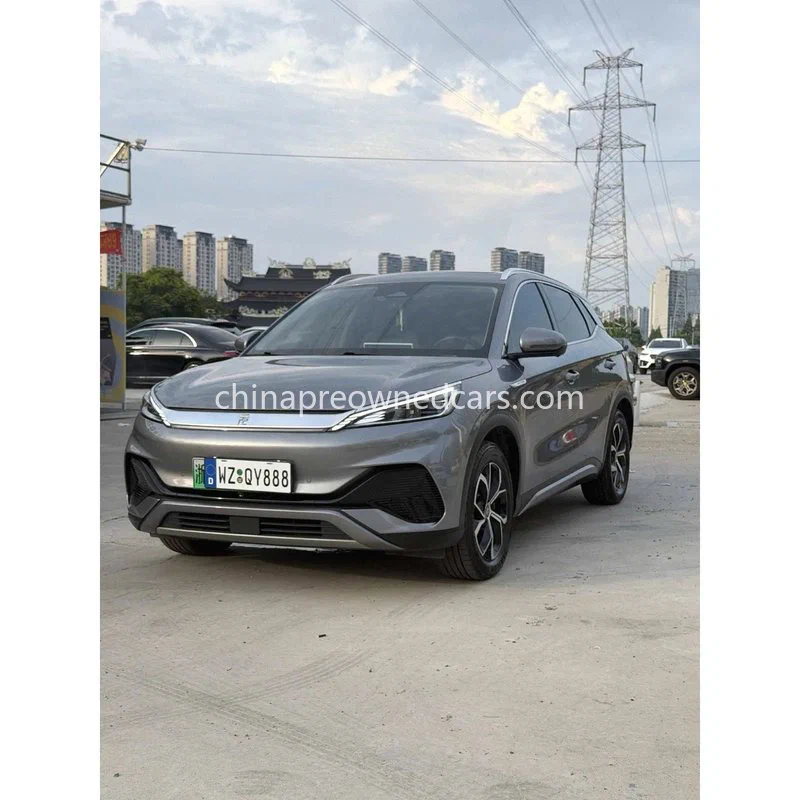
The Chinese SUVs we export are 1.5T and 1.6T petrol units, which puts them in the 10% band rather than the 20% one. A 3.0-litre European SUV of similar landed appeal sits in the 20% band — a structural 10-point advantage before any other consideration.

The rest of the stack
Import duty is only the first line. GRA also applies, on the same import:
- VAT 12.5%
- NHIL 2.5%
- GETFund levy 2.5%
- African Union levy 0.20%
- ECOWAS levy 0.50%
- EXIM levy 0.75%
- Examination fee 1%
- Special import levy 2%
Three details in that list are worth internalising:
VAT is charged on a duty-inclusive value. GRA’s basis is CIF + duty + NHIL + GETFund. You are paying tax on tax, which is normal in this region and routinely missed in spreadsheets.
The examination fee is levied only on used vehicles, calculated on CIF.
Overage penalty is calculated on CIF where it applies. Agricultural tractors under HS 8701, and ambulances, hearses and special-purpose vehicles under 8705, are exempt from overage penalty. Ordinary passenger cars are not.
Ghana operates the ECOWAS Common External Tariff as five bands — 0%, 5%, 10%, 20% and 35% — and GRA notes those band rates carry the accompanying levies with them rather than standing alone.
Across the models we ship, combined charges into Tema commonly work out near 30–35% of CIF. That is an observation from actual clearances, not a published rate. And because duty is assessed on CIF, your freight bill is itself taxed — so shipping three cars in a 40HQ rather than one reduces per-car freight and the duty on that freight together.

Two rules that catch people
Right-hand steering vehicles are not permitted. GRA states this plainly. There is a policy dispensation available only at the discretion of the Minister of Trade, and even when granted, Customs requires the vehicle to be dismantled pending a left-hand refit before it can be driven. Do not build a plan on it.
You can pay before arrival. Once you hold the Title and the Bill of Lading, duty can be paid before the vehicle reaches port. It can also be estimated in advance through ICUMS using the chassis number or VIN plus make, model and year, and GRA publishes a Used Vehicle Duty Calculator.
No one is exempt except the President, state institutions and diplomatic missions — and if any of those sell a vehicle onward, duty falls due before ownership transfers.
Common questions
Q: Can I reduce duty by declaring a lower purchase price? A: The valuation starts from the manufacturer’s original price with age depreciation applied, so a low invoice does not produce a low assessment. It produces questions.
Q: Which documents do I need to clear a vehicle? A: GRA lists the Bill of Lading or waybill and the Title. Your clearing agent will want more in practice, but those two are the base.
Q: How accurate are online duty estimates? A: A starting range only. The figure that counts is the one your agent obtains against the actual valuation for your VIN.