Ghana will require a Certificate of Conformance issued in the country of origin for every used car, and bans six categories outright. What changes and what does not.
On 14 August 2026 the Ghana Standards Authority issued Public Notice GSA/DGS/PN/26/09, signed by Director-General Prof. George Agyei. It sets out how Ghana will enforce its national vehicle standards from 1 October 2026, and it supersedes the earlier notice GSA/DGS/PN/26/08 published on 3 August.
If you import used cars into Tema or Takoradi, this is the most consequential document published this year. Read it as a change in how you import rather than whether you import — the GSA says explicitly that this is not a ban on used vehicles.
Six categories that can no longer enter
The notice prohibits importation of used vehicles that are:
submerged in water or flood-damaged
burnt or fire-damaged
carrying chassis or safety-cage damage — broken, cracked, bent or twisted
assembled from spare parts
without a speedometer reading in kilometres per hour
over fifteen (15) years old
Five of those six are condition tests, and all five are things a proper pre-purchase inspection already screens for. The one that reshapes sourcing is the age line. Note it is 15 years, not 10 — some industry write-ups circulating in China quote a ten-year figure for Ghana, and that figure does not appear anywhere in the GSA notice. Work from the official document.
The requirement that changes your process
The compliance mechanic matters more than the prohibited list:
All used vehicle units must be inspected in the country of origin by a GSA-approved third-party inspection body, and a Certificate of Conformance (CoC) issued attesting that each individual unit conforms to the applicable Ghana Standards — before shipment.
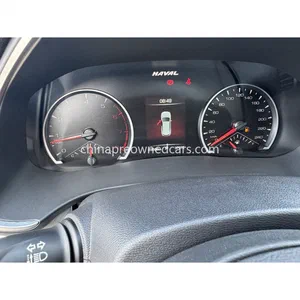
A unit from our current export stock, photographed in Nansha.
Two words do the work: country of origin, and each unit. Inspection happens in China before the car is loaded, not at Tema after it arrives, and it is per-vehicle rather than per-shipment. Vehicles that do not meet the requirements will not be permitted entry on arrival, which means a failed unit is a failure you discover while it is still on the wrong continent.
Importers, distributors, dealers, and on the new-vehicle side manufacturers and assemblers, must also register with the GSA Vehicle Homologation Unit (the GSA Auto Unit). New vehicle models require homologation; used vehicle units require the CoC.
The governing standard is GS 4510, Requirements for the Importation of Used Vehicles. The programme itself has existed since 2020 — what begins on 1 October 2026 is strict enforcement of it.
The cut-off, precisely
The notice is unusually clear on timing, and the detail is worth money:
Vehicles shipped before 1 October 2026 are not affected by the new requirements, even if they arrive in Ghana after that date.
Vehicles already in Ghana before the implementation date are exempt.
So the operative date is the bill of lading, not the arrival stamp. A container that sails on 28 September clears under the old regime.
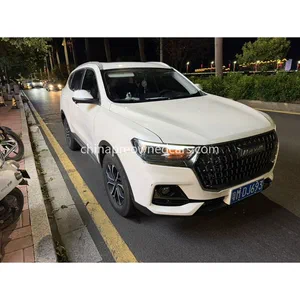
A unit from our current export stock, photographed in Nansha.
What this means for Chinese stock specifically
Chinese domestic used cars are typically two to five years old, so the 15-year line is not a constraint on this supply — it is a constraint on the very old European and North American units that have historically filled the low end of the Ghanaian market. If anything, the rule tilts the field toward newer stock.
The condition prohibitions are similarly aligned with how honest sourcing already works. Flood cars, fire cars and structurally repaired cars are exactly what a third-party appraisal is commissioned to detect. What changes is that the detection now has to be documented on a certificate travelling with the car.
The genuine new work is administrative: registering with the Auto Unit, using a GSA-recognised inspection body, and building the CoC into your pre-shipment timeline rather than treating inspection as an internal quality step.
What we cannot tell you yet
Which inspection bodies the GSA will approve, what the CoC will cost per unit, and how long it will add to a pre-shipment schedule are all matters of administration that were not settled in the notice. Anyone quoting you a firm per-car CoC fee today is guessing.
The GSA publishes a contact for exactly this purpose: [email protected], or telephone 030 398 0177. Ask them directly which inspection bodies are approved in China before you commit to one.
A unit from our current export stock, photographed in Nansha.
Common questions
Q: Is Ghana banning used car imports from October 2026?
A: No. The GSA states plainly that the programme “does not constitute a ban on the importation of used vehicles.” It bans six specific categories and requires per-unit certification for the rest.
Q: My container sails in late September but arrives in October. Am I caught by the new rules?
A: No. The notice exempts vehicles shipped before 1 October 2026 regardless of arrival date. Keep the bill of lading date defensible.
Q: Where does the inspection happen?
A: In the country of origin, before shipment, by a GSA-approved third-party body. Not at Tema on arrival.
Q: Does the 15-year limit apply to the model year or the registration date?
A: The notice says “over fifteen (15) years old” without defining the reference date. Confirm the counting method with the GSA Auto Unit or your clearing agent before buying anything near the line.