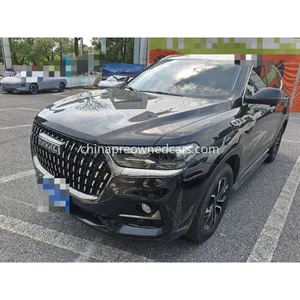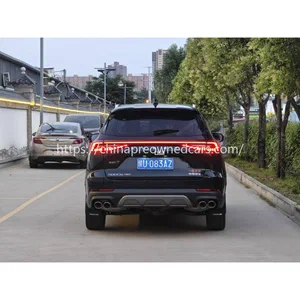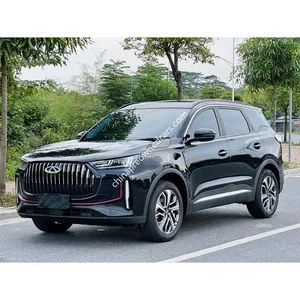
Battery state of health affects the resale value, usable range and import economics of electric vehicles exported from China. For buyers in Ghana, Nigeria, Kenya, Uganda and Tanzania, battery assessment must be considered alongside customs valuation, import documentation, charging compatibility and shipping requirements. These checks help importers estimate the total landed cost and identify technical or regulatory issues before a vehicle leaves China.
Battery condition and the true landed cost
Battery state of health (SOH) estimates a battery’s remaining capacity relative to its original capacity. It is different from state of charge, which measures how much energy is currently stored. A dashboard showing a full charge does not establish that the battery retains its original capacity.
Before purchasing a used BYD Atto 3, an importer should request a diagnostic report showing battery SOH, recorded fault codes and available charging data. Where possible, the assessment should include cell-voltage differences, battery temperature readings and evidence of previous battery repairs. An independent inspection can help establish whether the reported condition matches the vehicle’s diagnostic information. Neither mileage nor a seller’s condition grade can replace this assessment.
Battery degradation affects the vehicle’s commercial value because it changes the range available to the next owner. A vehicle that requires more frequent charging may attract a lower resale price, particularly where public charging is limited. Importers should compare the estimated usable range with typical daily travel distances, access to home or workplace charging, and local electricity costs. The resulting valuation should account for the cost of possible battery repairs, not simply the purchase price in China.
Customs valuation adds another consideration. Import duties and taxes may be calculated using a CIF-based customs value, representing cost, insurance and freight, subject to the destination country’s valuation rules. Customs authorities may question an invoice that appears inconsistent with comparable vehicles, declared condition or supporting payment records. Buyers should retain the purchase invoice, payment evidence, inspection report and shipping documents to support the declared value. Any applicable age-related charges or other adjustments must be checked against current local rules.

Charging compatibility, shipping and import clearance
Charging compatibility should be confirmed before a vehicle is selected. Chinese domestic-market EVs may use GB/T connectors, while other vehicles use CCS or CHAdeMO systems. These standards are not interchangeable without appropriate vehicle-side or charging-side compatibility. The BYD Atto 3’s exact charging specification should be checked against its model year, market version and vehicle identification number (VIN), rather than inferred from the model name alone.
Importers should establish which charging connectors are supported by accessible stations in their intended operating area. Public charging coverage and connector availability vary within each destination country, including between major cities and more remote locations. Home charging may provide a practical alternative, but the installation must meet local electrical requirements and the vehicle’s charging specification. An adapter should not be treated as a guaranteed solution because compatibility can depend on communication protocols and charging equipment.
Battery transport also requires advance planning. Lithium-ion batteries are generally subject to dangerous-goods requirements under applicable transport rules, including the UN 3480 classification for lithium-ion batteries shipped on their own. A battery installed in a vehicle is generally treated under a different classification, commonly UN 3481 for batteries contained in or packed with equipment, with specific provisions applying to the shipment. The correct classification depends on the actual configuration and transport rules. The carrier or freight forwarder should confirm documentation, battery condition declarations and any applicable restrictions before booking. RoRo shipping and container shipping have different handling requirements, acceptance policies and cost structures.
For Nigeria, customs preparation deserves particular attention. Depending on the applicable import procedure, Form M, the Pre-Arrival Assessment Report (PAAR), a certificate of origin, commercial invoice, bill of lading and other supporting records may be required. The clearing agent should confirm the current documentation sequence and any vehicle-specific requirements with the relevant authorities. Ghana, Kenya, Uganda and Tanzania also apply their own customs procedures, valuation methods and vehicle import conditions. Age restrictions, emissions rules and roadworthiness requirements can change, so these must be verified before purchase.
Delays often arise when documents contain inconsistent VINs, invoice values or vehicle descriptions, when required approvals are missing, or when customs requests additional valuation evidence. Export licensing, customs declaration and pre-shipment inspection must be addressed on the China side, while destination clearance follows local rules. Buyers should agree in writing who handles each document, inspection expense, freight charge and destination-side fee. The used vehicle market rewards accurate landed-cost calculations:: a low purchase price offers little advantage if battery degradation, connector incompatibility or a customs dispute makes the vehicle difficult to register or resell.
FAQ
Q: How can an importer verify the battery health of a used electric SUV?
A: Request a diagnostic report showing battery SOH, fault codes and available cell data, then compare the findings with an independent pre-shipment inspection. Confirm that the report relates to the exact VIN being purchased.
Q:: a low purchase price offers little advantage if battery degradation, connector incompatibility or a customs dispute makes the vehicle difficult to register or resell.
FAQ
Q: How can an importer verify the battery health of a used electric SUV?
A: Request a diagnostic report showing battery SOH, fault codes and available cell data, then compare the findings with an independent pre-shipment inspection. Confirm that the report relates to the exact VIN being purchased.
Q: Are GB/T, CCS and CHAdeMO charging connectors interchangeable?
A: No. They use different connector designs and charging protocols, so compatibility must be checked against the vehicle version and available charging equipment in the destination market.
Q: Which customs documents are required to import a used electric vehicle into Nigeria?
A: Depending on the applicable procedure, documents may include Form M, PAAR, a certificate of origin, commercial invoice and bill of lading. The importer and clearing agent should verify current requirements, valuation rules and applicable duties before shipment.